
Guide
Keeping a Santa Rosa medical office clean between patients
Between patients, a medical office stays fresh through day porter rounds in the public rooms, while the full clean happens each night after the last appointment and clinical rooms follow the practice’s own procedures.
What a clinic morning does to the front office
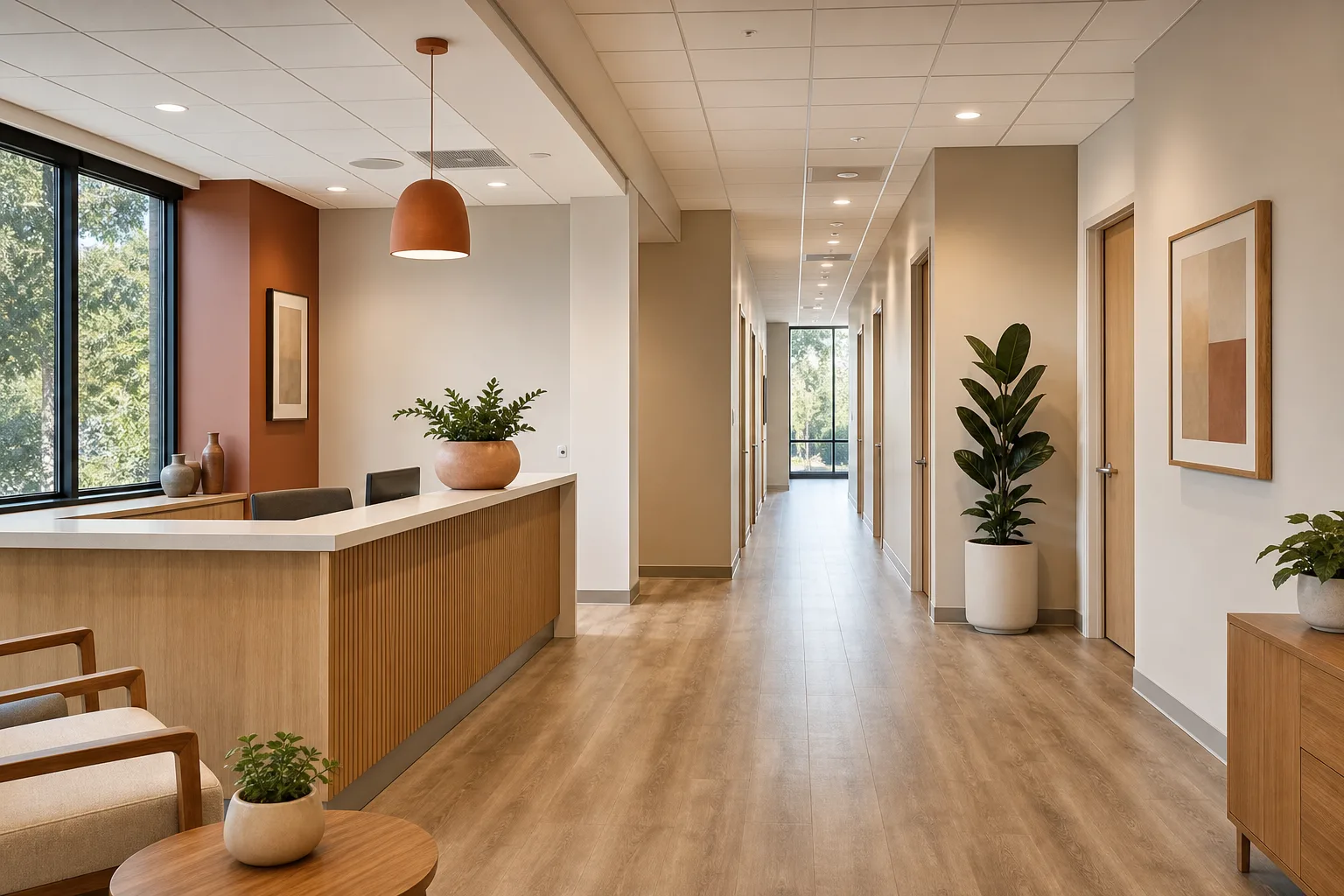
Picture a family practice in Santa Rosa at ten in the morning. Every waiting room chair is taken, the check-in counter has been leaned on by each arrival, the clipboard pens have passed through many hands, and the patient restroom has seen more use since opening than it will for the rest of the afternoon.
None of that can wait for the evening crew. Patients spot a smudged counter or an empty soap dispenser at once, and they read it as a clue to how carefully the whole practice runs. That is why keeping the public rooms fresh between patients is day porter work rather than a job for the crew that arrives after close.
Clinical rooms sit apart from that loop. Exam and treatment rooms are cleaned the way the practice’s written procedures describe, and the porter’s rounds stay in the spaces patients share on the way in and out.
The porter’s loop during clinic hours
A porter in a medical office works a circuit rather than a single pass. It begins at the entrance and the reception counter, runs through the waiting room and the patient restrooms, and comes back to the front before the next cluster of appointments arrives.
Each lap targets the touch points patients reach for: door handles, counter edges, chair arms, the pen cup, light switches and restroom fixtures. Sinks get wiped, bins are emptied before they overflow, and soap, paper towels and tissue are topped up as they run low. Hand prints on the inside of the entry glass come off after a wet morning.
Spills are handled the moment they happen. A dropped coffee by the check-in window or rainwater tracked in at the door is cleared before the next patient steps through it. Our day porter service sets its hours around the clinic’s rhythm, which usually means the morning rush and the busy stretch after lunch.
The full clean after the last patient leaves
When the doors lock, the recurring janitorial visit takes over the whole suite. Reception, the waiting room, administrative offices, corridors, staff rooms and restrooms all get a complete pass: surfaces wiped, carpet vacuumed, hard floors mopped, trash and recycling collected, and supplies restocked for the morning.
The night crew works through rooms the porter only touches up. Break rooms get their counters, sinks and floors done after a day of constant use, workrooms and private offices get the general office routine, and desk surfaces are cleaned for staff who ask for them.
Dividing the day this way keeps each role focused. The porter protects first impressions while patients are present, and the evening visit resets the office so the porter starts tomorrow from a clean baseline instead of catching up. Our medical office cleaning plans are built around that pairing.
Clinical rooms follow your procedures
Exam rooms, treatment rooms and procedure areas are cleaned exactly as the practice’s written procedures set out: the products the facility specifies, the order the rooms are done in, and whether a room must be empty of patients before work begins. The practice supplies those details, and the crew follows them room by room. Every disinfectant is an EPA-registered product, left wet for the full dwell time on its label.
Rooms the facility names for terminal cleaning receive it under the written room procedure, ending with the handoff steps the practice sets out. Those rooms are booked for evenings or weekends, when no appointments are scheduled in them.
Tying clinical work to the practice’s own documents means clinical staff always know how a room was cleaned. The procedure they wrote is the procedure the crew used.
Mapping the split for your practice
Quotes are put together after an on-site look at the building, and that is where the split gets mapped. We walk the suite with the office manager, mark which rooms belong to porter rounds and which to the nightly visit, and note every room where clinical procedures apply.
Practices in shared buildings anywhere in our Sonoma County service area can fold the lobby and shared corridors into the same plan, timed so the building’s common areas and the suite are cleaned in step. Treatment rooms with hard floors can add periodic floor care on a weekend, and our guide to when floors need stripping or carpet extraction explains how to time it.
A few useful answers
Quick answers.
When should a porter be on site at a medical office?
Porter hours line up with the clinic’s busiest appointment blocks, often the morning rush and the hours after lunch. The evening visit covers everything else.
Which areas does the porter look after during clinic hours?
The entrance, reception counter, waiting room, patient restrooms and the touch points patients use along the way. Clinical rooms follow the practice’s own procedures.
Whose procedures set the cleaning in exam rooms?
The practice’s own. Its written procedures set the products, the room order and the patient-occupancy rules the crew works to.
Can the nightly clean start right after the last appointment?
Yes. Evening and night visits begin once patients have gone, so the full clean is finished before staff return the next morning.
Can the night crew work around patient charts?
Yes. Crews follow HIPAA-aware conduct, so charts, files and computer screens stay unread and untouched.
Industries
Related industries
Services