
Industries
Industrial and Warehouse Cleaning in Santa Rosa
Santa Rosa warehouses, flex buildings and light manufacturing sites cleaned from the front office to the loading dock, timed to fit your shift pattern.
Printable checklist
Santa Rosa’s working buildings
North of downtown, the business parks near the county airport mix office, flex and light industrial space, with corporate offices, research labs, manufacturing and distribution sometimes under one roof. Closer to the city center, smaller industrial units and multi-tenant manufacturing buildings line the west-side industrial streets.
Precision work is part of the local mix as well, from electronics and test equipment to medical devices. An industrial building usually pairs a polished front office with production and storage space behind it, and each side gets a cleaning plan of its own.
Front offices, break rooms and locker areas
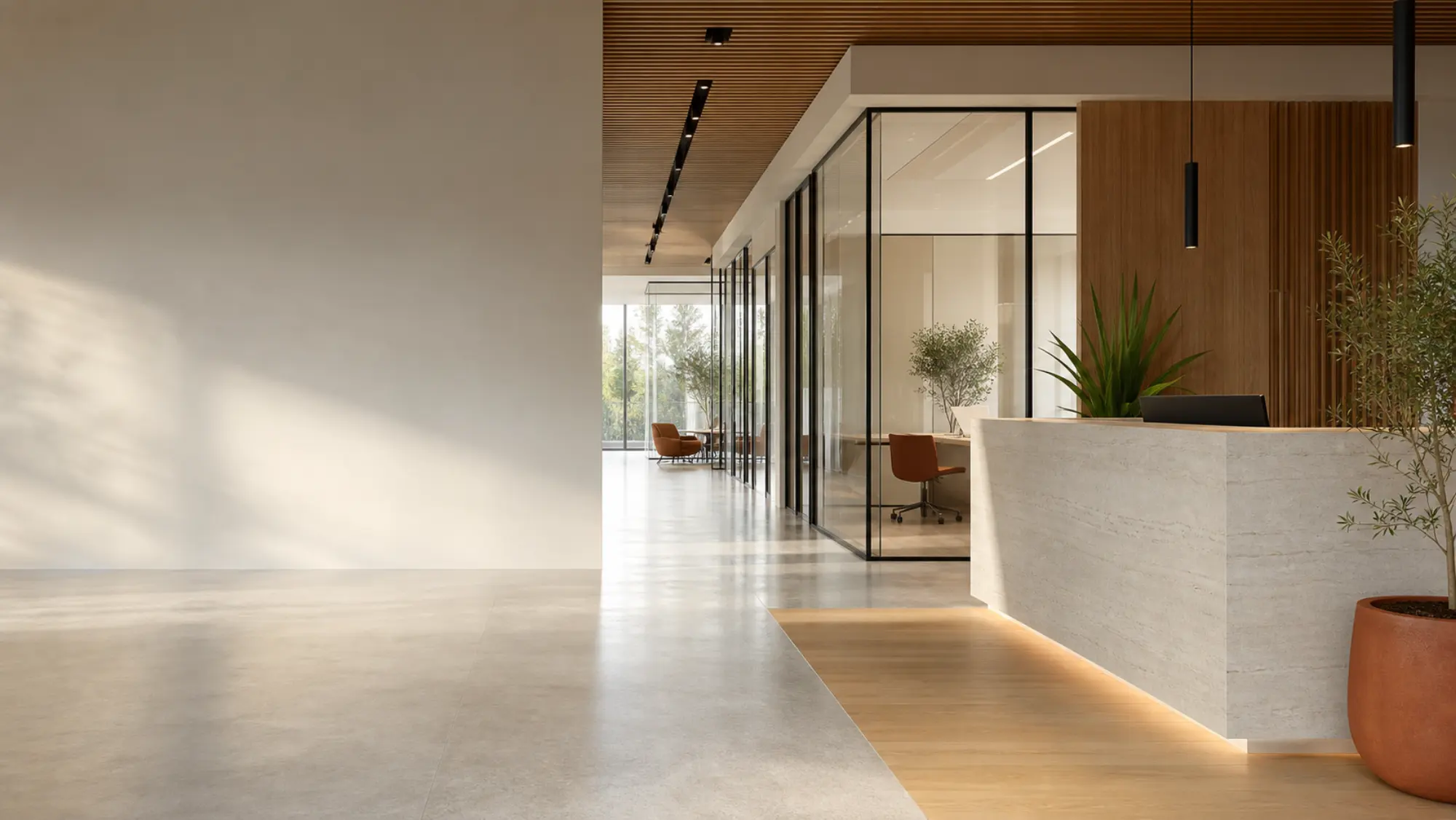
The front office is where visitors, buyers and new hires first meet your company. Reception counters, conference tables, desks and kitchenettes are dusted and wiped, glass at the entry is cleared of fingerprints, trash and recycling are emptied, and carpet and hard floors are cared for so the lobby looks as sharp as the product you ship.
Break rooms and locker areas carry the heaviest use per square foot in an industrial building. Every shift leaves crumbs on the tables, spills inside the microwave and handprints on refrigerator doors and vending fronts. Those surfaces are washed, sinks are scrubbed, locker room benches and floors are cleaned, and restroom paper and soap are refilled before the next crew clocks in.
Warehouse floors, docks and aisles
Warehouse floors collect a steady layer of tire dust, stretch wrap scraps, pallet splinters and grit rolled in through the dock doors. Open floor is swept and machine scrubbed, travel aisles are kept clear of debris, and dock aprons and thresholds get extra attention because that is where outside dirt enters the building.
In racked storage, the open floor and the aisle ends are the focus, since that is where forklifts turn and pickers walk. A clean floor keeps painted walkways and safety lines easy to see, reduces the dust that settles on stored goods, and gives auditors and customers touring the space a better picture of how the operation runs.
Dock offices and shipping desks, where drivers sign paperwork and wait for loads, are cleaned along with the floor, and the restrooms drivers use get the same care as the ones inside.
Production support on the plant’s timing
Production areas run on their own clock, so support cleaning follows it. Production lines, the floors around them, walls and ledges at reach, trash points, hand sinks and the restrooms nearest the work are cleaned between shifts, on weekends or during a changeover window your managers pick. Cleaners wear the protective gear your site rules call for and stay out of any area you mark off.
Multi-shift operations often split the work. Offices and restrooms get a nightly visit, the warehouse floor gets a weekly scrub, and bigger projects such as degreasing a dock or refinishing a lunchroom floor wait for a shutdown week. That rhythm keeps the building clean without slowing a single order.
Periodic work that keeps the building sharp
Recurring visits handle the daily soil, and periodic projects handle the wear. Concrete floors can be machine-scrubbed, resilient tile in offices and break rooms can be stripped and refinished through floor care, and office carpet can be extracted once traffic lanes darken.
When the building stays busy through the day, a day porter can keep restrooms stocked, empty bins and wipe break room tables between the nightly visits. Starting with the nightly service and adding porter hours once you see where the building needs help during the shift keeps the plan lean.
What warehouse cleaning costs in Santa Rosa
Recurring warehouse and light industrial cleaning in Santa Rosa usually runs $0.09 to $0.21 per square foot per month as of 2026, measured on the area that actually gets cleaned. Large, open storage buildings with a short task list start near $0.06, while busy manufacturing sites with several shifts and many restrooms reach about $0.36. The band reflects published market pricing for the year.
Here is how it adds up. A 40,000-square-foot distribution building, with its offices, restrooms and break room cleaned nightly and the warehouse floor scrubbed once a week, comes to about $4,800 a month at $0.12.
The share of office and restroom space moves the price most, because those rooms take far more labor per foot than open storage. Shift count, the amount of dust and oil on the floors, protective gear requirements and any high work that needs a lift add to it. Racked space that only needs its aisle ends cleaned, and large open floors suited to ride-on scrubbers, bring it down.
A few useful answers
Common questions.
How does floor cleaning work around forklift traffic?
Floor work in active areas is timed to the gaps between shifts or the quietest hours, and cones and signs mark any wet section so drivers route around it until it dries.
How often should a warehouse floor be machine scrubbed?
Dock aprons and main travel aisles usually need a scrub every week, quieter storage aisles every few weeks, and the schedule tightens during peak shipping months when traffic climbs.
What information speeds up a warehouse quote?
A floor plan or rough square footage, your shift times, any protective gear rules, the areas that stay off limits, and a list of the restrooms, break rooms and offices on site.
Can the front office be cleaned at a different time than the warehouse?
Yes. Offices are often cleaned in the evening after staff leave, while warehouse floors are scrubbed during a weekend or a shift change, so each area gets the timing that suits it.
Which parts of an industrial building need cleaning most often?
Restrooms, break rooms and locker areas need daily care because every shift uses them. Front offices follow close behind, while storage floors and aisles hold up well on a weekly scrub.
Services